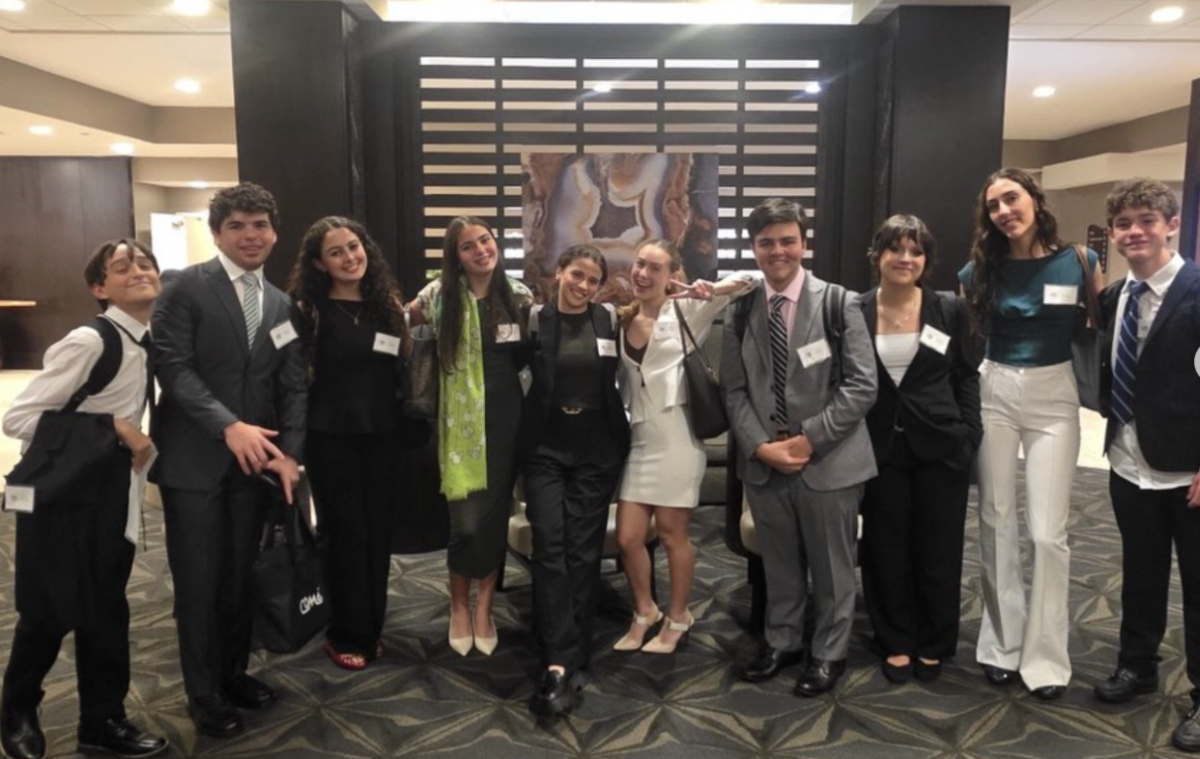
I’m sure we’re all familiar with the phrase: “Be the change you want to see in the world.” While we certainly might agree with it, it’s something we very seldom seem to put into practice. It simply seems impossible. After all, how could we, merely children in the eyes of many, ever be agents of change especially in our own communities? Sure, we might pick up a water bottle we see on the floor. We might treat our peers with respect and try to uphold those very same values that we’ve been taught. However, many of us, especially those of us who still haven’t finished their studies yet alone, began to think about applying to college, might feel as if change just isn’t something possible yet. Oftentimes, it feels like all we can do to create change is through word of mouth or small acts, that over time, build a legacy.
Nonetheless, Alejandro Benitez proves us wrong. At just 17, he’s managed to show us all that age and social boundaries are nothing in the face of will and passion. Benitez was the change he wanted to see in the world, and it all started with something as simple as a food allergy. But it’s so much more than that. For him, it’s a struggle he grapples with every single day, yet somehow, it’s a battle he has managed to overcome through time.
Food allergies are a serious medical condition that significantly impact the lives of thousands of children, teenagers, and adults. For those who struggle with severe food allergies, exposure to something as simple as certain ingredients can trigger extremely dangerous reactions, ranging from mild symptoms to anaphylaxis, a potentially life-threatening medical emergency that could end someone’s life. This is a reality that creates a constant risk and therefore limits these individuals’ full and safe participation at school, work, recreational, social, and commercial spaces.
Unlike other health conditions, food allergies are not visible. For many, it goes unnoticed or simply ignored. It is this lack of awareness and consciousness of severe food allergies that causes these individuals to suffer in silence. This invisibility can lead to carelessness, disbelief, or lack of preparation in many settings, both public and private. For those living with this condition, everyday activities — such as attending classes, participating in a celebration, or eating at a restaurant — can become moments of insecurity, anxiety, or exclusion. Something as simple as eating out with friends and family can become a life-threatening event due to the lack of protocol and awareness.
“They think it’s a personal preference, not a life or death situation,” said Alejandro, while sharing one of his own harrowing personal experiences, in which he had to abruptly go to the hospital because of irresponsibility and lack of consideration from the restaurant he was visiting amidst Father’s Day celebrations.
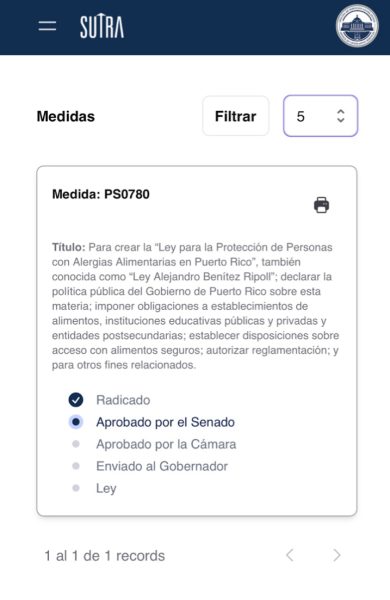
It was these very same painful experiences that ignited Alejandro’s passion to create awareness for those who struggle just as he does. He decided to propose a draft to the Puerto Rican government, advocating for change and awareness of severe food allergies in schools, restaurants, and other venues. “Ley para la Protección de Personas con Alergias Alimentarias en Puerto Rico” encompasses 19 articles, all of which aim to create safer, more inclusive environments. It requires restaurants, schools, and public spaces to have clear protocols, trained staff, allergen labeling, and emergency medication available. The law also guarantees the right to bring safe food into places where it’s normally restricted and ensures preparedness in emergencies and shelters. It promotes public education, creates systems to report incidents, and encourages best practices through voluntary certifications.
In his article, Alejandro states: “Esta ley tiene como propósito establecer una política pública afirmativa que proteja a las personas con alergias alimentarias severas, promueva su inclusión en todos los espacios y prevenga situaciones de emergencia mediante medidas educativas, preventivas y de respuesta inmediata.”
This law’s purpose is to establish a public political affirmation that protects people with severe food allergies, promotes inclusion in all spaces, and prevents emergencies through awareness, prevention, and immediate response.
As of October 16th, Alejandro’s bill has already been approved, and is nearly ratified by the Senate.
This is not just a major accomplishment for Alejandro Benitez and individuals with severe food allergies, but also an accomplishment for us– for our youth. It’s proof that any of us can ignite change if we have the courage to keep trying. However, it’s above all a call to action. Let Alejandro Benitez stand as testament that progress towards a better future starts with us, whether that is through working with ourselves or with our community.