I’ve been staring at my computer for about 30 minutes now, and haven’t written a single word. I think it might be because I’m afraid of putting untruthful words on this blank screen, words that won’t fully capture the essence of my marathon and its journey. But honestly, there is no single way to describe it. It was overwhelming and transformative, exhausting and meaningful: everything and nothing all at once.
Now that I have broken the ice with you, my dear reader, I’d like to tell you a Greek legend about the art of endurance:
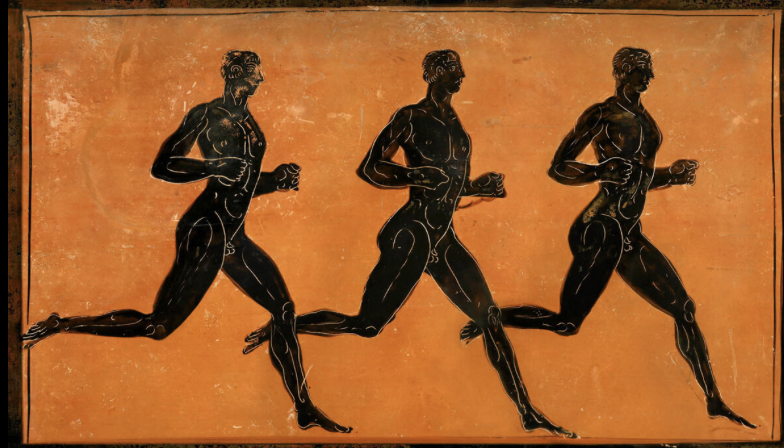
During the Persian Wars in 490 BC, Pheidippides, an Athenian courier, was assigned to deliver the news of the Athenians’ victory over the Persians in Athens after the Battle of Marathon. Previously, however, he had been told to seek help from Sparta, where he ran almost 240 kilometers in just two days before turning around to deliver the victory message. After the Greek victory, he completed a final run back to Athens, covering about 40 kilometers, which is almost 25 miles. Upon his arrival, he collapsed and died. Later, during the first modern Olympic Games in Athens in 1896, Pheidippides’ steps were retraced in honor of his sacrifice, and the distance was set to approximately 40 kilometers. In the end, his astonishing accomplishment is what inspired the creation of the marathon in modern athletics, making him the ‘first marathon runner.’
Unlike Pheidippides, who had to run out of necessity, I chose to run out of my own free will. Setting this goal for myself was a terrifying choice, a bold move. I trained from the beginning of August until mid-January, and it’s safe to say that the hidden secret behind staying motivated and energized to train was absolutely nothing. I was not motivated every day and most definitely did not have constant energy. The backbone of it all was discipline: a skill of restraint, consistency, and self-control. It’s how I got up every Saturday at 4:00 a.m. to run, ate properly when I didn’t feel like it, and stretched every night when all I wanted was to sleep. The training itself was enjoyable but clearly arduous, mostly because of all the time it required. I would run 40 and 50 miles weekly while still having to study, play basketball, spend time with family and friends, work on my extracurriculars, and even get eight hours of sleep. Fortunately, I’m an extremely organized person, but even with that, discipline was indispensable. As I applied this skill to my training, it eventually became a habit, and I began incorporating it into the rest of my life: to my studying, to my personal goals, to my relationships. In this way, I never became a slave to my moods, and I knew every morning that whatever goals I set for the day would get done by the time I went to sleep.
“Only the disciplined ones in life are free. If you’re undisciplined, you’re a slave to your moods and your passions.” – Eliud Kipchoge
I became one of the free.
In doing so, my body drastically changed. Frankly, I’ve always been a skinny girl and a picky eater, meaning this experience forced me out of my comfort zone in ways I didn’t think were possible. The extraneous amount of exercise I was doing weekly required me to start eating almost double the amount of calories I used to. This change in my nutrition was quite demanding: constantly carb-loading and also eating ridiculous amounts of protein. Consequently, I began to gain weight. It was mostly muscle weight, but that didn’t matter. The body that stared back at me was still unrecognizable, wondering what it did to deserve it. I not only saw these differences but felt them. My legs were in a state of never-ending soreness during most of my training. Fortunately, my body got used to it at one point and was able to master its own recovery. Not to mention the constant fatigue and hunger, especially after the long runs. The tiredness would consume me, my brain would fog, and the hunger would refuse to subside.
The days eventually blurred into cycles of school, run, eat, repeat.
While the training was meant to prepare me physically, it mostly prepared me mentally. Once I would catch myself saying sentences like “Oh, this weekend’s long run is only 15 miles,” I knew I was officially going insane. It’s impressive how the human brain is able to change its perception of distance so drastically. The training allowed me to learn how to push through moments of doubt, failure, and fear; fear of disappointing myself, mostly. Part of the reason I did this was to prove to myself that I’m capable of more than I think (plus bragging rights, obviously), so I couldn’t help but feel the self-pressure building up. Despite all of the mental preparation I went through, nothing could have fully prepared me for the race.
Breathe in, breathe out. Shoulders back. I WANT TO CRY. Pick up your feet. Smile. Relax your upper body. WHEN IS THIS GOING TO END? Take your next gel in 17 minutes. Breathe in, breathe out. Drink some water. WILL I MAKE IT?
The actual marathon was disillusioning.
I’m not very fond of when people say, “It’s not about the destination, it’s about the journey,” but I have to give it to them because they are very right. I could sit here and talk about the ways in which I suffered throughout the race, but it’s not worth it. It won’t matter. Because it was never about the race. It was never even about running itself. It was about life. Right now, I can give you a list of three simple reasons why the marathon is an excellent representation of life:
- You get out what you put in.
- It’s unpredictable.
- You take it one mile at a time.
There’s a certain beauty in suffering, things not going according to plan, and still moving forward. That same beauty lives in Pheidippides’ story: it isn’t simply about the physical test he endured but embodies true determination, sacrifice, and courage.
This is an experience that I will carry with me for all eternity, woven into the deepest curves of my soul, reminding me how far I can push myself when driven by purpose.