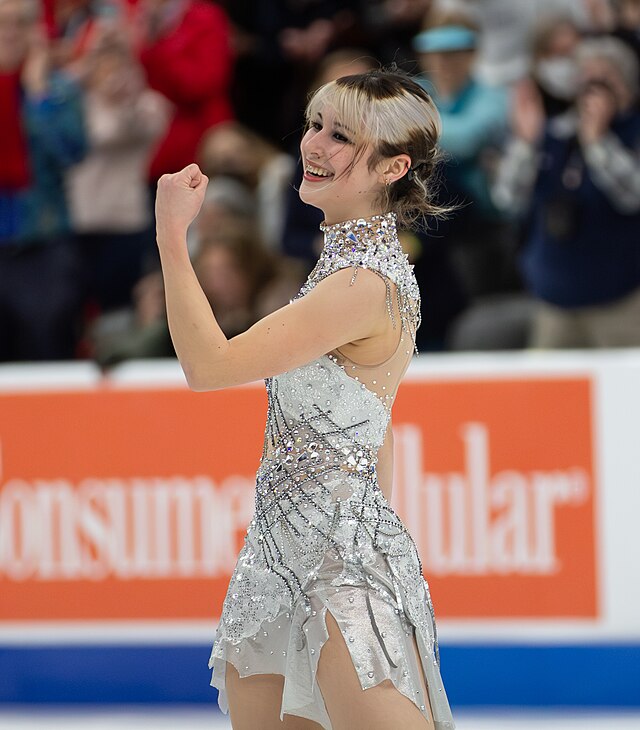
In Alysa Liu’s every pirouette, there is a statement to be uncovered regarding the relationship between success, and one’s sense of self: that there should be no relationship at all. The lack of compromise in Liu’s expression bleeds into her legacy as an athlete, both in her field specifically, and as a general mental benefit conducive to greatness. The sport of figure skating has long been beholden to an idea of traditionalism, vanity, and elegance, an almost bourgeois spectacle. Liu has effectively wrestled that definition into her own terms with a balance of grace and swagger, and in doing so, she has grown a following that is impossible to ignore. In this most recent olympic cycle, she has gone from 330,000 instagram followers pre-olympics, to over 5 million as of late (Songco, 2026), but her influence is not just felt in numbers: she is becoming an against-the-grain icon in real time, and unlike her routines on the ice, she may have tripped and fell into it.
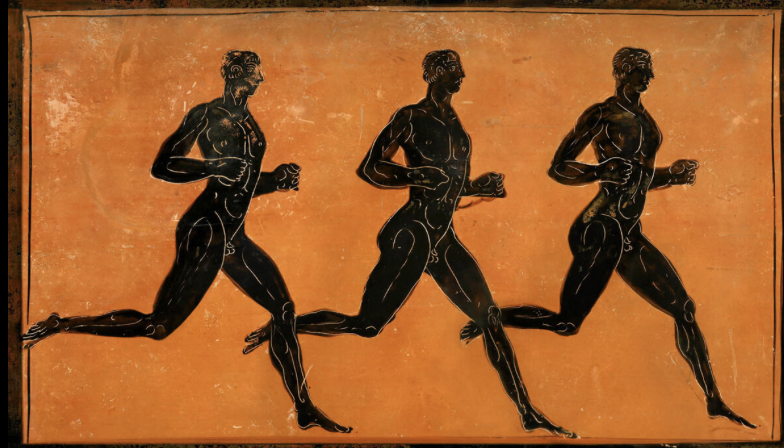
Liu’s impact on the sport, rapidly developing as it is, cannot be fully realized without first mentioning the state that she found figure skating in. The sport has eurocentric origins, predating the American revolution on many accounts, and there is an argument to be made that this is baked into its DNA. Nearly a century later, it was expanded on by Jackson Haines into a more expressive style (Hamilton & Scott, 2026). In 2026, however, the stagnation has long since returned. Even with the increasing difficulty in athletic manuevers, a stubborn veil remains, especially for female athletes in the sport, that favors traditionalism, gender roles, and an idealism that is preconcived at the scorer’s table. For example, flexibility, emotion, and appearance are all taken into account for women in the sport: “Women, on the other hand, are more likely to grab one of their feet and pull it up behind their heads, sometimes while spinning fast enough to set off a nose-bleed, as Mirai Nagasu did in Vancouver. Women’s programs also emphasize a great deal of emotion when they skate, while men are expected to display their athletic strength and power” (Pages, 2010). This is not to say that adapting expectations in coordination with physical limits and biological differences is not standard among all sports, and it is no doubt a valid and necessary element. In figure skating specifically, however, there is a unique level of formality compared to other olympic events.
Alysa Liu has possessed a potent and deadly talent for her entire tenure in the world of women’s skating, becoming the youngest ever to land a triple axel at just 12 years old (Alysa Liu – National Team: Figure Skating – U.S. Figure Skating, 2019). Feats like these create a pressure, however, and beget expectations that figure skaters have needed to answer to for the entire history of the practice. There becomes a standard that is based on the corporeal, and whether this is ethically or morally sound has never been a part of the internal discussion- “In truth, the perfect skater is a combination of Twiggy and Barbie, thin enough to perform the difficult jumps, and desirable enough to fit skating’s cover girl image” (Ryan, 1995). Perhaps this pressure was a factor in Liu’s retirement from skating in 2022, at just 16 years old. This level of national attention is abnormal for the teenage experience, and figure skaters are expected to be at the mercy of it, as opposed to a step ahead.
Alysa Liu’s return to the world stage has been on her own terms, with her own image. She’s gained an audience bigger than just fans of her sport, and in doing so, she’s sold figure-skating into the real estate of a collective American subconscious, and pumped fresh blood into the slowing heart of a dormant zeitgeist. Alysa Liu is not just pushing the figure-skating envelope by being openly and outwardly singular, or by having an alternative aesthetic in the least alternative stage imaginable; she is pushing the envelope by being healthy and happy, and unabashed about all of it. Among all of the successes she’s come by recently, the idea that these concepts can go hand in hand is of the most astonishing and timely.
Sources:
Alysa Liu – National Team: Figure Skating – U.S. Figure Skating. (2019, February 7). U.S. Figure Skating. https://usfigureskating.org/sports/figure-skating/roster/alysa-liu/1175
Hamilton, & Scott. (2026, February 20). Figure skating | Olympics, Jumps, Moves, History, & Competitions. Encyclopedia Britannica. https://www.britannica.com/sports/figure-skating
Moriarty, M. (2026, February 23). Why did Alysa Liu retire? Explaining USA figure skater’s Olympics comeback after quitting in 2022. The Sporting News. https://www.sportingnews.com/us/olympics/news/why-did-alysa-liu-retire-usa-figure-skater-gap-2022-olympics/fc76577cd99ab1fd66b8e798
Pages, S. (2010, March 31). Policing Gender in Figure Skating – Sociological Images. https://thesocietypages.org/socimages/2010/03/31/guest-post-policing-gender-in-figure-skating/
Ryan, J. (1995). Little Girls in Pretty Boxes. Google Books. https://books.google.com.pr/books?hl=en&lr=&id=mEo-WPbwOZUC&oi=fnd&pg=PT5&dq=Ryan,+J.+(1995)+Little+Girls+in+Pretty+Boxes:+The+Making+and+Breaking+of+Elite+Gymnasts+and+Figure+Skaters.+New+York:+Warner+Books+.&ots=l0Oip89EqK&sig=TamoRLJzid7JBAEkLIrJEaP5o3M&redir_esc=y#v=onepage&q&f=false
Songco, P. (2026, February 25). Alysa Liu’s 1.5 Million Lead Over Eileen Gu Catches Attention After Winter Olympics. Athlon Sports. https://athlonsports.com/olympics/alysa-liu-1-5-million-lead-eileen-gu-catches-attention-winter-olympics
Turns and Loops. (2023, May 1). A Brief History of Figure Skating: Grace, Elegance, and Athleticism. https://turnsandloops.com/blogs/figure-skating/a-brief-history-of-figure-skating-grace-elegance-and-athleticism?srsltid=AfmBOorljQBDVCwPxNoHEipLGBcOXWuV99iXHaY2r1bYsU5roF4neUUx